A lively downtown. A serious fitness destination. Neighborhoods that make it easy to get outside. We’re looking for people with the experience to turn promising ideas into well-run places.
An independent invitation to explore opportunities. These are community proposals, with no sites secured or projects approved by this initiative.
THREE PLACES TO START
Specific opportunities. Questions worth answering.
Each brief gives a capable team a concrete starting point: the source record, proposed use, current readiness, required studies and the next decision. Read online, open the location map or take the PDF to a working meeting.
A public coffee bar, dependable workspace, quiet study rooms and practical business support could turn an ordinary workday into several downtown visits. Start with a small, well-run trial in suitable existing premises. Earn the larger center through repeat use and a sustainable operating plan.
District concept · building and operating team sought
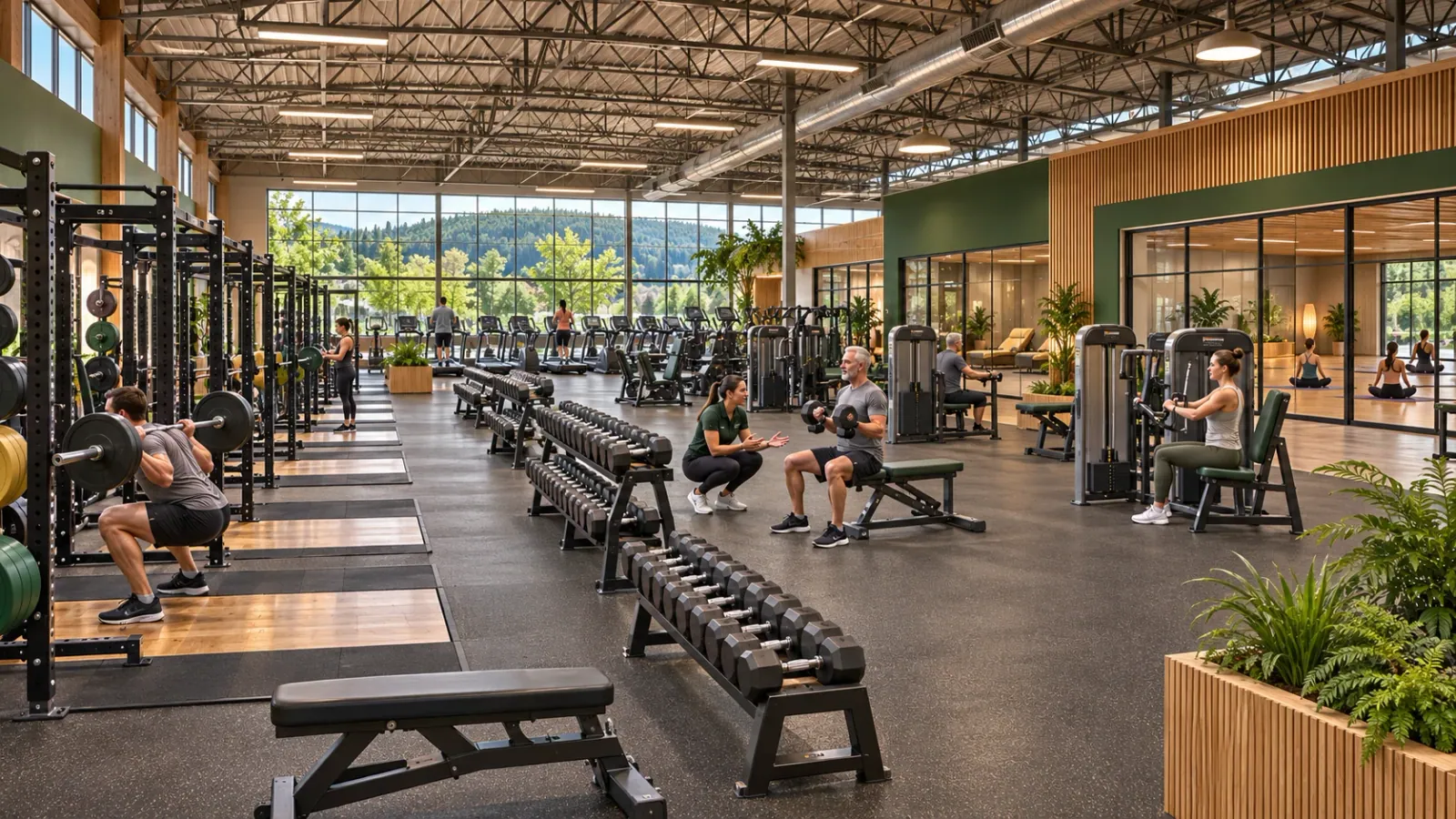
Investigate a serious 48,000 sq ft club with premium strength and cardio equipment, dedicated studios, recovery services and a healthy food court. The former Albertsons provides a concrete building to investigate; a successful conversion still depends on affordable occupancy, a strong operator and enough paying members.
Public lease advertisement · operator and feasibility review needed
Investigate whether the Rifle Range candidate can support homes with useful outdoor space, safe walking connections and modest neighborhood services. Start with the land-use and infrastructure questions. A good neighborhood plan must fit the land, serve residents and make sense alongside the area's employment needs.
Published inventory candidate · land-use and owner review first
Property and code sources reviewed November 10, 2026. Review dates do not turn a listing into an availability guarantee or an inventory record into a survey. Each brief explains its evidence and limits.
The planning study includes Green, Winchester, Drain, Yoncalla, Myrtle Creek, Tri-City and other inland Douglas County communities. Their needs belong in the discussion about shopping, work, recreation and access.
A developer still needs a market study for the particular project: who would use it, what they can pay, how far they will travel and which alternatives already serve them.
2020 Census residents across 23 nonoverlapping Census ZIP areas.
The total includes Roseburg. It is a historical planning baseline, not a current population estimate, daily shopper count or measured retail market.Check the population calculation
START WITH THE PLACE
Find the location. Read the conditions.
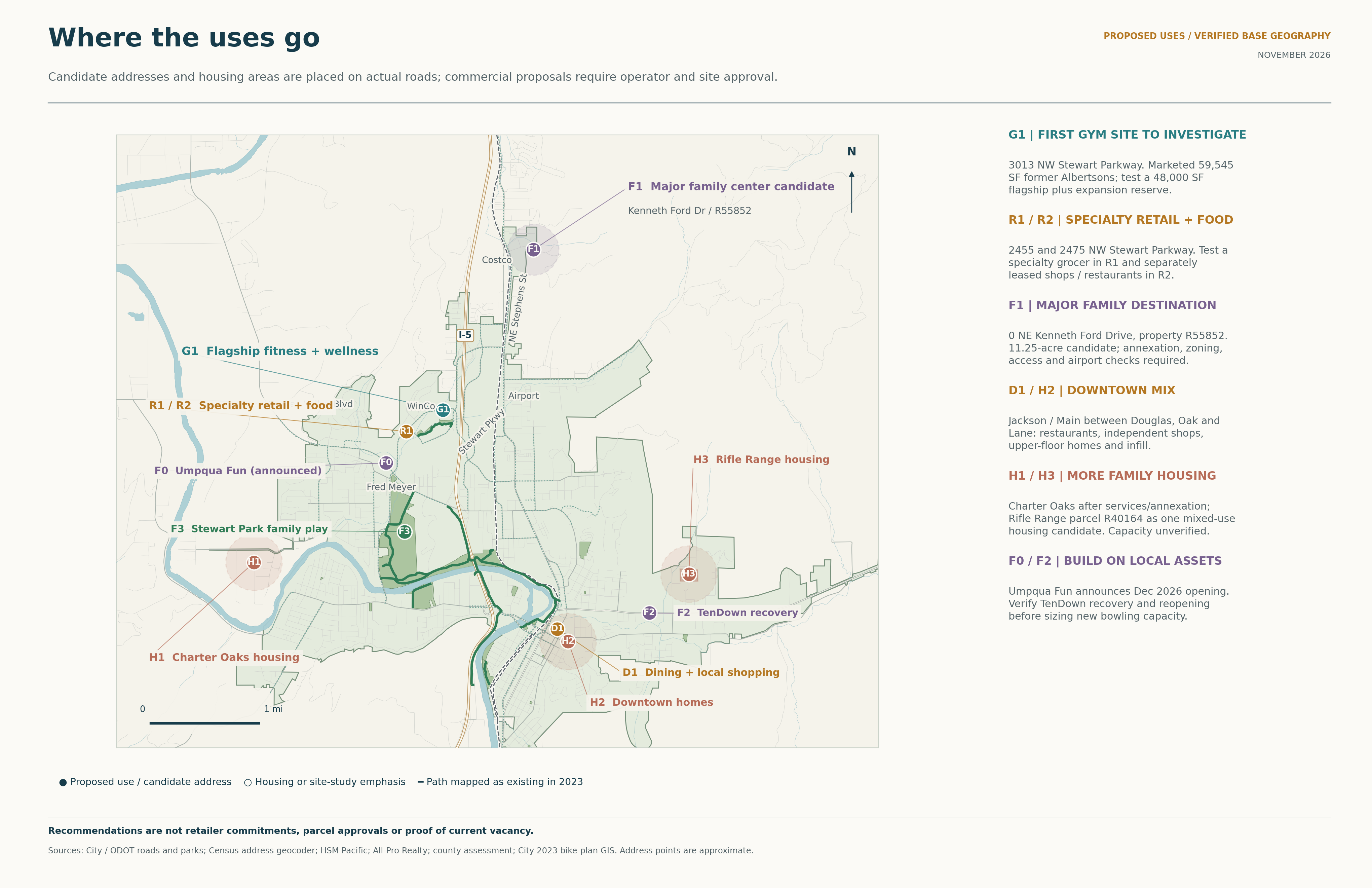
Select a candidate to locate it in Roseburg. The full map adds traffic observations, reference parcels, parks and connections. A district marker identifies an area to investigate; it does not offer an owner’s property for development.
Loading the location map…
Downtown reuse
Downtown Entrepreneur Commons
D1 Jackson–Main district, including the Douglas–Oak–Cass–Lane blocks and suitable nearby Washington Street premises
District concept · building and operating team sought.
District study-center marker. It does not identify an available building or property boundary.
The right project earns repeat use and remains an asset after the launch. These proposed principles give residents and project teams a shared way to discuss quality. They are not adopted development regulations.
01
Make the street work for people.
Give pedestrians a clear entrance, continuous accessible routes, safe crossings and useful connections to nearby destinations. Resolve delivery, emergency and vehicle access early.
02
Choose materials that can be maintained.
Use durable, repairable finishes, shade suited to the site and lighting that serves people without unnecessary glare. Include replacement costs and a named maintenance responsibility.
03
Protect what gives Roseburg character.
Work with the scale, details and useful buildings already here. Treat historic review as an early design question. Show how a new project contributes to its actual neighborhood.
04
Make the business work through the year.
Explain the operator, opening hours, staffing, achievable prices and customer demand. Test a smaller program where it can answer a real commercial question.
05
Show the whole cost of delivery.
Include infrastructure, professional fees, contingencies, financing and cash for opening. Identify which costs belong to the project and which would require a public decision.
06
Deliver a visible community benefit.
Be specific about housing, jobs, services, public access or facilities. Explain construction impacts, affordability and long-term operations alongside the attractive images.
A town’s identity shows up in the details.
See how a coordinated approach to streets, signs, planting and upkeep could make everyday visits more welcoming.
You can contribute before a property agreement or investment decision. The first exchange should establish the team’s relevant experience and the information needed to judge an opportunity.
Read the brief and choose your question.
Identify the opportunity, the role you could perform and the missing evidence you can help obtain. An alternative property or smaller operating model is welcome.
Introduce a team with relevant work.
Use the private inquiry to provide your firm, professional contact details and two or three completed projects. Describe your actual role, the typical scale of your work and what you need next.
Confirm the people and the property.
An organizer can review your links, record questions and discuss appropriate introductions. Owner consent, current terms and each party’s authority must be established before a site visit or project work.
Agree a defined feasibility stage.
A willing project team can set the scope, price and responsibilities for professional work directly. Publish a factual progress update only after the relevant people approve what can be shared.
Have delivered projects to show?
Developers, operators, builders and design professionals can submit a structured introduction. Property owners and first-time operators can use the general business form.
Your inquiry stays private.
You receive a saved reference. Submitting does not create a public profile or a verified qualification. Introductions require a conversation before contact details are shared. The site does not collect money or arrange a transaction.
Inquiries are stored in the protected organizer inbox. There are no automatic email notifications or guaranteed response times. Public support statements use a separate consent and identity-review process.
WORK WITH THE PEOPLE ALREADY HERE
Local knowledge belongs on the team.
Existing organizations provide economic-development assistance, business advice and official review routes. These are independent resources. Their inclusion does not establish a partnership, endorsement or commitment to any featured project.
Economic development and business support
Use established local networks to understand workforce needs, existing businesses and available assistance. Ask about the fit of a proposed project before assuming that incentives or funding apply.
Confirm the actual jurisdiction and review sequence for the property. City land-use review, County building review, utility capacity and highway access are separate questions where they apply.
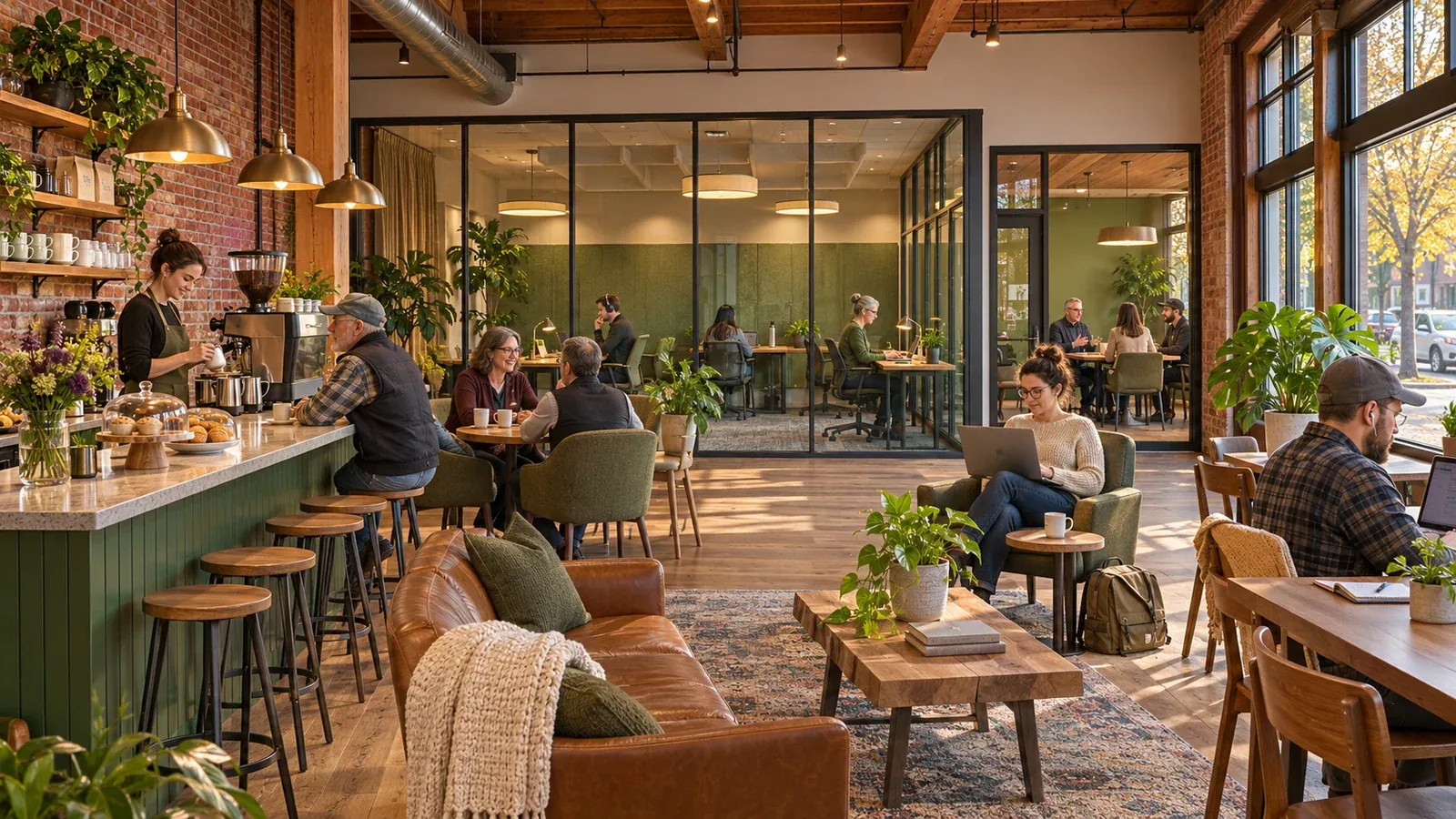 Illustrative entrepreneur commons · No premises selected